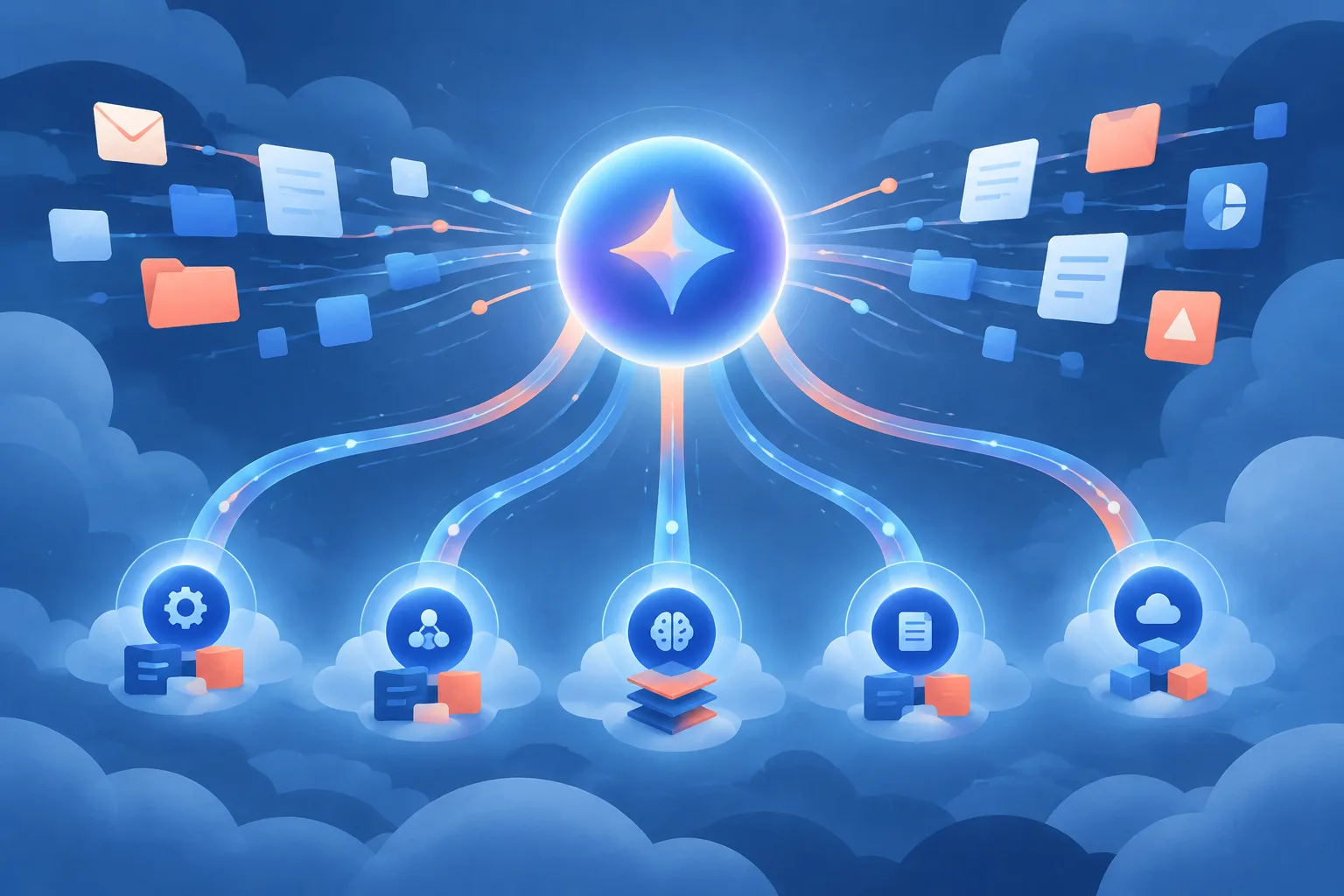
Google Cloud is recasting Gemini as more than an assistant embedded in individual products. At its Gemini at Work 2026 event, the company presented the system as a single enterprise agent that can accept objectives, plan multi-step work and return completed results inside the tools employees already use. The Register reported the announcement on October 8, describing it as an attempt to make Gemini the central coordination layer for work across a business.
Google Cloud chief executive Thomas Kurian said the agent can draw on a company’s business context, use skills and tools, connect to internal systems and choose a model suited to each job. According to The Register’s account of Kurian’s remarks and accompanying Google material, the promised results could appear in documents, inboxes and developer environments rather than in a separate chat window. Google also says the service carries cost controls, security, administration and governance intended for corporate deployment.
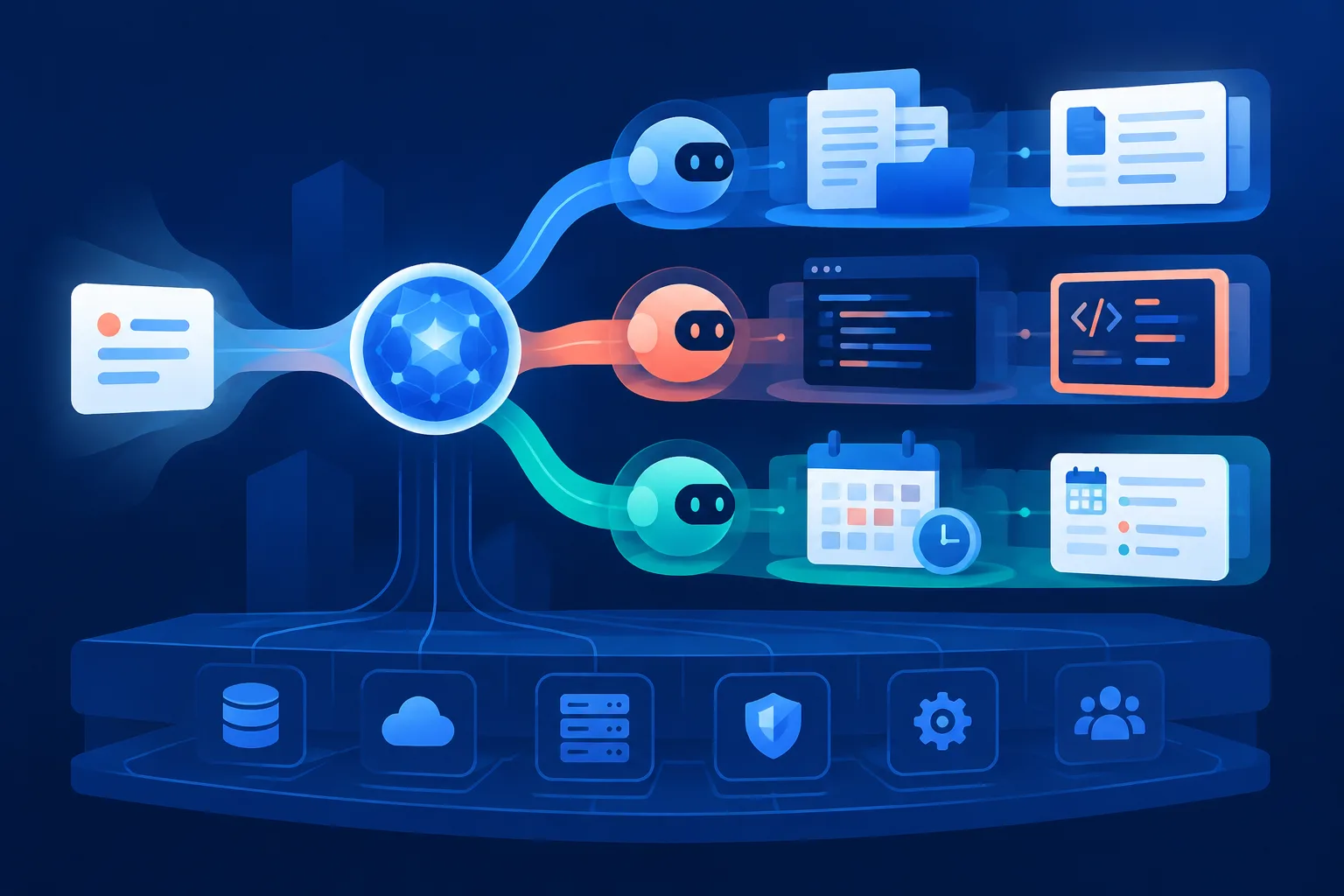
The pitch turns Gemini into an orchestration system rather than a single model. The Register reported that Gemini can create temporary, task-specific sub-agents for parts of a larger assignment. Those sub-agents would have their own identities, while the main service coordinates their work. Google says the orchestrator can use models from its Gemini family as well as Anthropic’s Claude models today, with additional private and open models planned for the future.
That architecture matters because the product name can obscure how many components may participate in a job. The agent is distinct from the underlying models it calls, and a request may involve several temporary workers, tools and enterprise data sources. Google’s proposal is therefore less about asking one chatbot a question than about assigning an objective to a managed software process that decides how to complete it.
Google is also trying to make the agent feel continuous across the workplace. The Register said the service is designed to operate within Gmail, Drive, Docs, Slides, Sheets, Chat and Calendar, while also being available on major mobile and desktop platforms and, where enabled, in third-party or headless workflows. Because the system runs in Google Cloud, the company says it can retain the context needed to move between those environments.
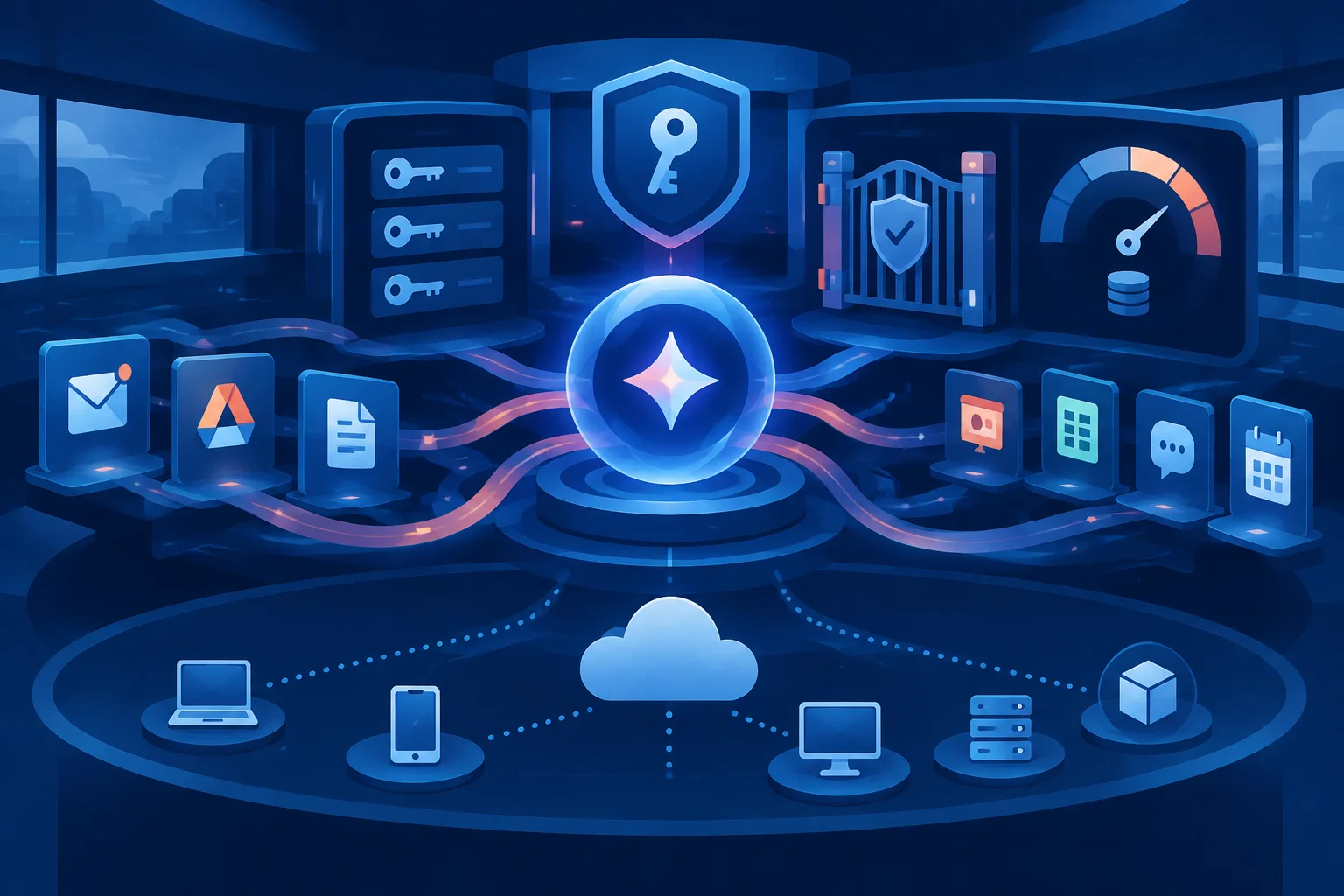
Governance is central to the sales case. Kurian said each Gemini agent receives an identity separate from the employee who starts it, allowing company policies to be applied to agents in a way that resembles controls for human users. Administrators can also set a budget before a job begins, with that limit intended to cover the entire task. The Register noted that the existence of such controls also reflects a practical problem: enterprise spending on AI agents can be difficult to predict.
Google paired the product vision with self-reported adoption and performance figures. Alphabet chief executive Sundar Pichai said nearly 80 percent of Google Cloud customers use the company’s AI products, and that almost 500 enterprise customers each processed more than one trillion tokens over the prior year. He also said Gemini 4 Argon scored 77.9 percent on the DeepSWE v1.1 coding benchmark. Inside Google, Pichai said, the model reduced post-submission code rollbacks by 30 percent while agentic code submissions rose by 35 percent. These figures were presented by Google and were not independently validated in The Register’s report.
Kurian cited NTT Docomo as another example, saying the Japanese telecommunications company saves 450,000 hours annually with data agents. Taken together, the claims frame Gemini as infrastructure for delegated work rather than a feature added to office software. The unresolved question is whether organizations can make that delegation reliable, understandable and economical when one branded agent may be routing work among many models, tools and short-lived sub-agents.
Comments
Loading comments…